
The Estonian University of Life Sciences and the National University of Life and Environmental Sciences of Ukraine renewed their cooperation agreement during an online meeting held on 20 October. The discussion between the universities’ leaders and researchers moved from general plans towards specific areas of shared interest, research topics and potential joint activities.
The meeting continued discussions that began in Tartu in September, when a delegation of Ukrainian university rectors visited the Estonian University of Life Sciences. The online meeting brought together members of the leadership teams as well as representatives of institutes and research groups from both universities.
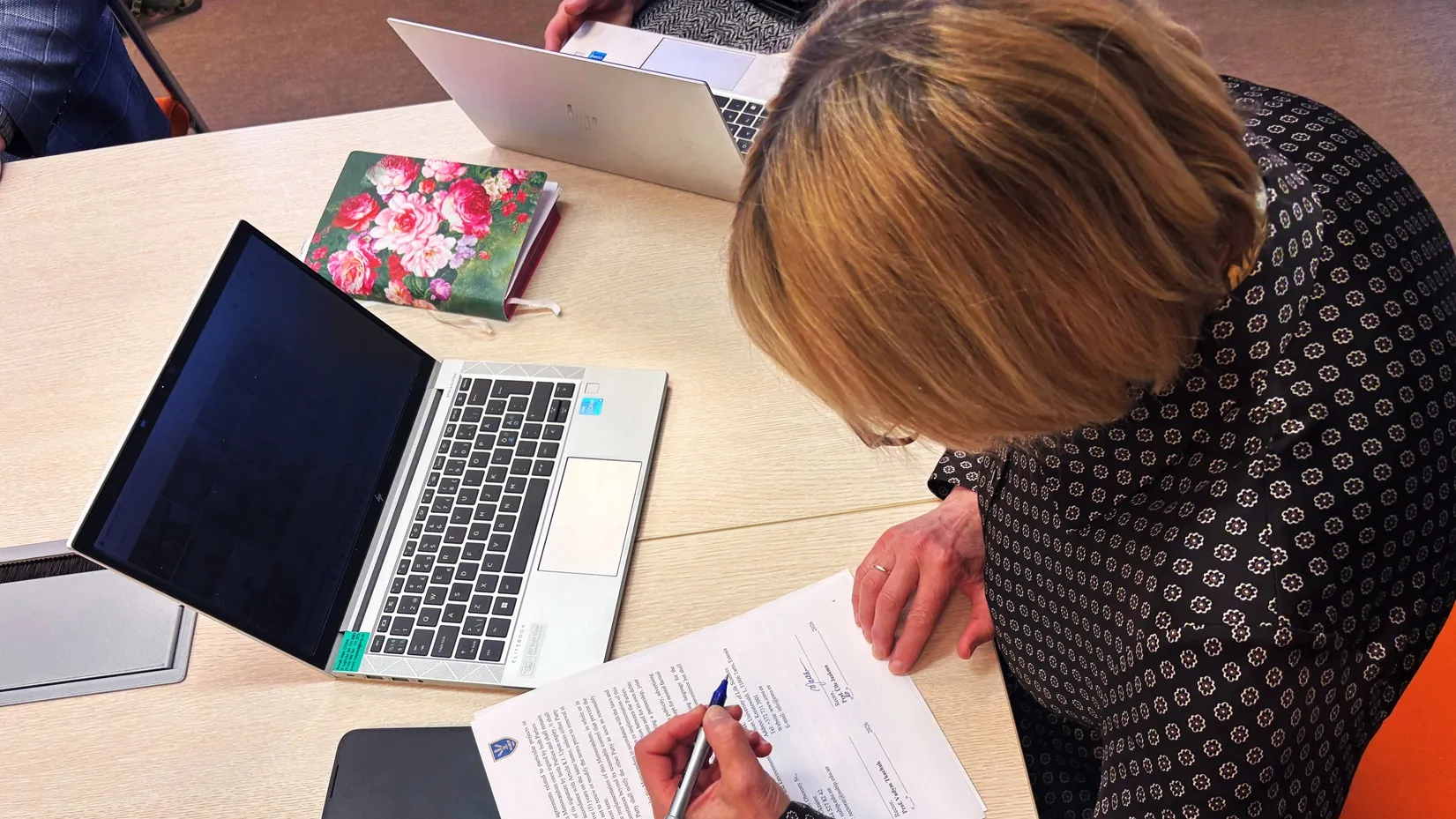
At the beginning of the meeting, Ülle Jaakma, Rector of the Estonian University of Life Sciences, and Vadym Tkachuk, Rector of the National University of Life and Environmental Sciences of Ukraine (NUBiP), signed the updated cooperation agreement.
Rector Ülle Jaakma said that the Estonian University of Life Sciences already cooperates successfully with Ukrainian colleagues in several fields, but there is certainly more the university can do to help Ukrainian researchers and students become more closely involved in European academic networks. The agreement provides a framework for joint research and educational projects, student and staff mobility, the development of joint study programmes, the organisation of academic events and the pursuit of international funding opportunities.
Oleksandr Labenko, NUBiP’s Vice-Rector for Scientific and Pedagogical Work and International Affairs, gave a brief overview of the university’s activities and expertise. His presentation was followed by short thematic presentations from his colleagues. The discussion demonstrated that the expertise of the two universities complements each other in many fields.
Soil health and carbon sequestration were identified as an important area for cooperation. Ukrainian researchers are particularly interested in combining remote sensing, field measurements and artificial intelligence-based geospatial analysis to assess the effects of military activity on soils and agricultural landscapes. Cooperation with the Estonian University of Life Sciences could also support the development of soil monitoring in Ukraine in line with European Union principles and the monitoring capabilities of Copernicus.
In veterinary medicine, opportunities for cooperation were identified within the One Health approach. Potential joint research topics include antimicrobial resistance, meaning the resistance of pathogens to the medicines used to treat them, as well as zoonoses, food safety, animal welfare, farm biosecurity and infectious disease surveillance.
Potential areas for cooperation were also identified in forestry, with a focus on forest pathology and the restoration of forests damaged by war. In the bioeconomy, researchers are interested in the valorisation of by-products from agriculture and food production. Ideas in the field of water management included monitoring water scarcity and water quality, as well as modelling the effects of climate change, military activity and damaged infrastructure on Ukrainian water bodies and food security.
One potential area for cooperation between Steffen Noe from the Estonian University of Life Sciences and Ukrainian colleagues is radioecology. Ukrainian researchers highlighted their extensive
research experience in the Chornobyl region and in areas affected by military activity. Potential cooperation could include modelling the movement and bioavailability of radionuclides, restoring damaged soils, assessing the radioecological safety of food chains, and comparing measurement methods used by Estonian and Ukrainian laboratories.
The participants also discussed cooperation in agricultural engineering and involvement in joint project proposals. One example is a COST Action proposal that has already been prepared and focuses on artificial intelligence-based environmental monitoring and modelling.
In addition to research projects, the participants identified opportunities for guest lectures, the development of shared teaching materials and improvements in the quality of education. They also discussed the creation of joint courses and study programmes, the joint supervision of doctoral theses and opportunities for future field research. As a next step, thematic working groups from both universities will continue developing specific ideas for cooperation.
Editor:

Head of the Department of Marketing and Communication
Rector's Area of Responsibility
Department of Marketing and Communication
+372 7313044
+372 731304453315313
53315313