
On Monday, 23 November, Marju Kaivapalu-Kaasik defended her doctoral thesis at the Estonian University of Life Sciences, entitled “Uptake and allocation of heavy metals in hybrid aspen and silver birch plantations on former agricultural lands and a reclaimed oil shale quarry”.
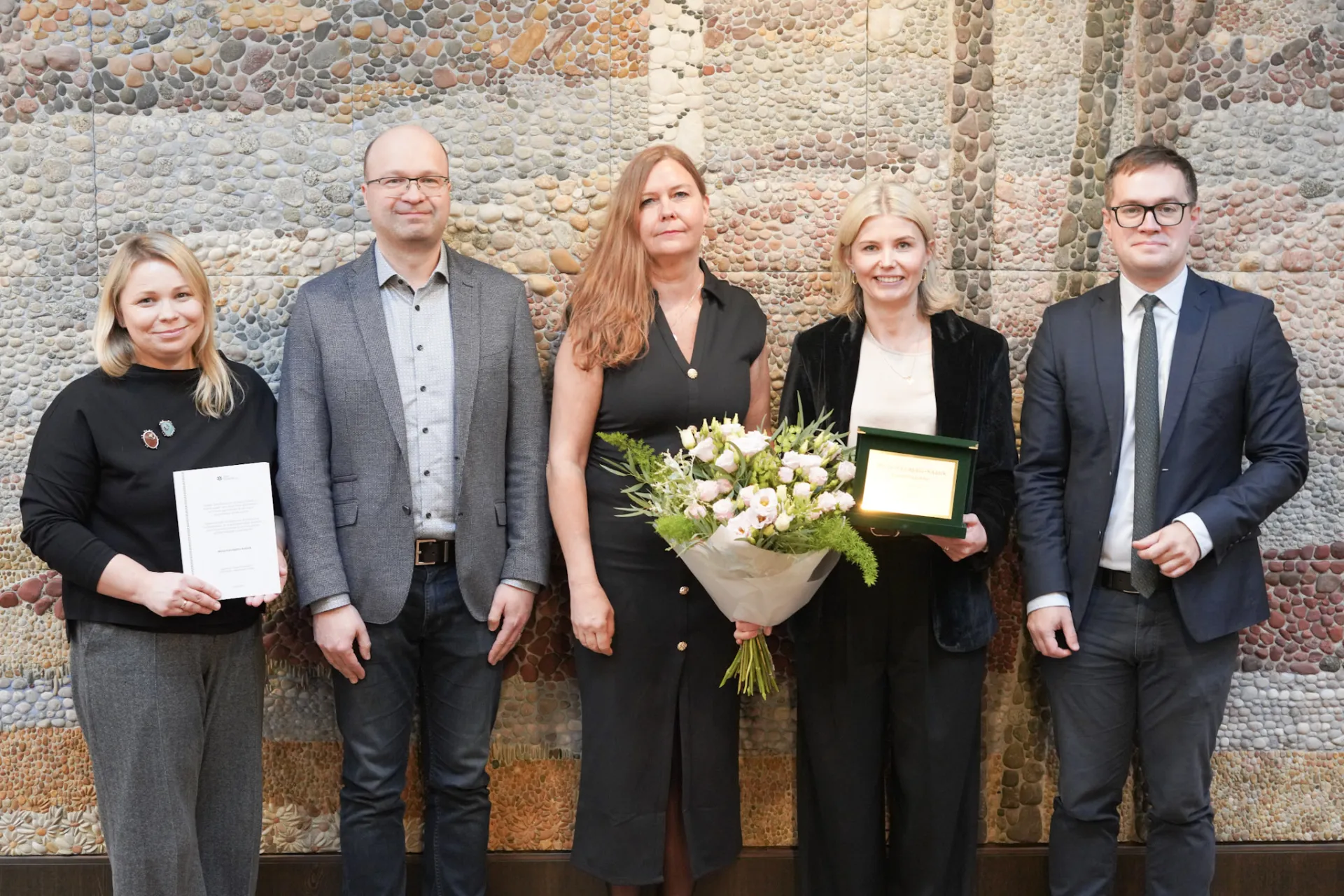
Her research investigated the accumulation of heavy metals in soil and trees, as well as the potential of tree plantations to improve the condition of contaminated soils.
The doctoral thesis was supervised by Researcher Katri Ots, Professor Reimo Lutter and Associate Professor Arvo Tullus from the Estonian University of Life Sciences. The opponent was Dr Arta Bardule from the Latvian State Forest Research Institute Silava.
Heavy metals persist in the environment for long periods and can negatively affect ecosystems by accumulating from soil into plants and the food chain. It is therefore important to understand how heavy metals move from soil into trees and which factors influence their accumulation. Kaivapalu-Kaasik studied hybrid aspen and silver birch plantations established across Estonia in the 2000s on former agricultural land and in areas affected by industrial emissions, including reclaimed spoil heaps at the Aidu oil shale quarry in north-eastern Estonia.
Heavy metal accumulation is influenced by land-use history and soil properties
The doctoral research assessed the effects of land-use history, site type, soil properties, stand development and tree species on heavy metal concentrations in soil, stemwood and bark.
The study showed that heavy metal concentrations in soil were strongly influenced by land-use history. Concentrations of several elements, particularly cadmium, lead, zinc, molybdenum and nickel, were higher at industrially affected sites and on reclaimed oil shale quarry spoil heaps than on former agricultural land.
However, the findings also revealed that heavy metal uptake by trees is determined not only by their concentrations in soil. Soil acidity (pH), organic matter and nutrient contents also play an important role. The effect of site type varied between tree species but was generally less significant than the influence of specific soil properties.
Silver birch may help remove heavy metals from soil
Kaivapalu-Kaasik also investigated how heavy metals are distributed within different parts of trees. The results showed that cadmium and zinc accumulated preferentially in bark. Meanwhile, concentrations of chromium, copper, iron, manganese and zinc were generally higher in wood formed during the first ten years of tree growth than in wood formed later.
A comparison of hybrid aspen and silver birch revealed that silver birch accumulated larger quantities of heavy metals per hectare than hybrid aspen. This indicates that silver birch has greater potential to remove trace elements from soil through biomass.
The findings suggest that hybrid aspen and silver birch plantations may help stabilise soils affected by heavy metals and offer potential for phytoremediation, a process that uses plants to improve the condition of contaminated soils.
The doctoral thesis is available in the digital archive of the Estonian University of Life Sciences EMÜ DSpacelink opens in new page.
Editor:

Research Communication Specialist
Rector's Area of Responsibility
Department of Marketing and Communication
53585680
53585680More information:

Specialist of Silviculture
Institute of Forestry and Engineering
Chair of Silviculture and Forest Ecology
