
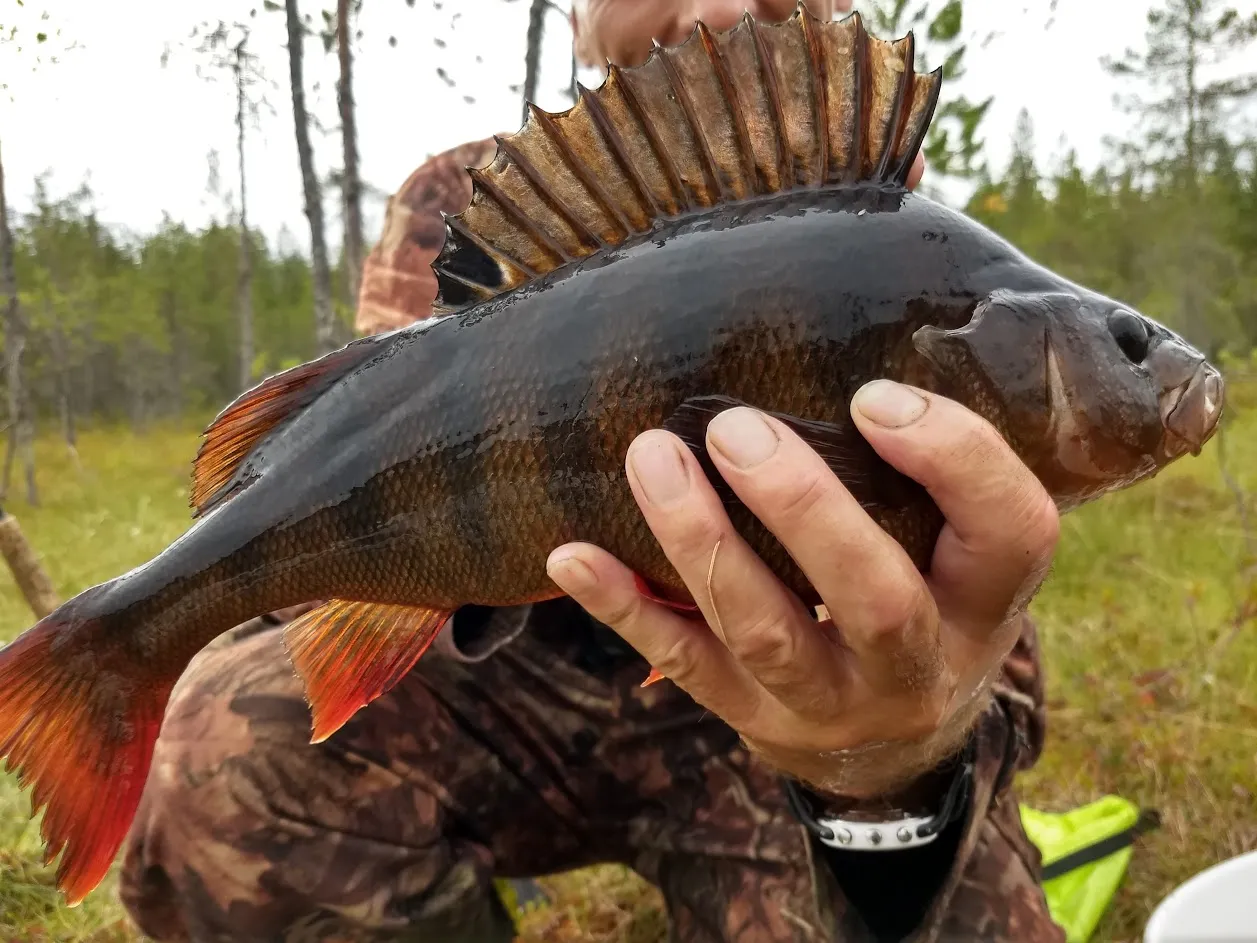
Researchers from the Estonian University of Life Sciences and the Swedish University of Agricultural Sciences mapped regions that regulate gene activity in Eurasian perch and investigated their links to environmental adaptation. To address this, they applied ATAC-seq to Eurasian perch for the first time, making this one of the first studies to use the method in fish.
An organism’s entire genetic material must fit inside each tiny cell, so DNA is tightly packed. For a cell to use the information contained in a gene, the corresponding region of DNA must be accessible. ATAC-seq identifies these open regions of the genome, where DNA is less tightly packed.
Open genomic regions contain many regulatory elements that can be compared to switches controlling gene activity. They help determine when, in which tissue and how actively a gene functions. Studying these regions can also improve our understanding of how organisms adapt to different environmental conditions.
“ATAC-seq has so far been used mainly in model organisms and farmed fish. It has been used very little to study gene regulation in wild-caught fish,” explained Konrad Taube, first author of the study and a PhD student at the Estonian University of Life Sciences. “The new map allows us to see which regions of the genome can regulate gene activity in Eurasian perch and to investigate how these regions are linked to environmental adaptation.”
The study compared perch from dark-water and clear-water lakes. These habitats differ in light conditions, water chemistry, food resources and parasite communities, providing a natural setting for investigating how populations adapt to different environmental conditions.
Earlier studies have identified genetic differences associated with adaptation in the perch genome and compared gene activity across different environments. ATAC-seq adds a new perspective by revealing which regions of the genome are accessible to the cellular machinery and can influence gene activity.
The researchers identified more than 76,000 open chromatin regions in the eye, liver and spleen of Eurasian perch. The results showed that chromatin accessibility patterns depended primarily on the tissue examined: largely different regions of the genome were accessible for regulating gene activity in the eye, liver and spleen. A smaller proportion of open chromatin regions was associated with lake type.
The researchers also found that genetic changes associated with adaptation occurred more frequently than expected in open regulatory regions. This confirms that adaptation depends not only on the information contained in genes but also on how gene activity is regulated.
According to Professor Anti Vasemägi, Professor at the Estonian University of Life Sciences and the Swedish University of Agricultural Sciences, and lead author of the study, new methods are helping researchers move from describing genome sequences towards understanding how genomes function.
“We have become quite proficient at sequencing genomes and identifying the genes they contain, but a list of genes alone is not enough,” Vasemägi said. “The next major challenge is to understand how those genes are regulated and how variation in this regulatory system contributes to adaptation in nature.”
The resulting map provides a foundation for further research into gene regulation in Eurasian perch. The study also improves our understanding of regions of the genome that do not themselves encode proteins but influence adaptation and evolution.
The study “Chromatin Accessibility Reveals Adaptive Regulatory Variation in a Keystone Freshwater Fish”link opens in new page has been published in the scientific journal Molecular Ecology. The research was supported by the Estonian Research Council and the Swedish Research Council.
Taube, K., Noreikiene, K., López, M.-E., Gross, R. and Vasemägi, A. (2026). “Chromatin Accessibility Reveals Adaptive Regulatory Variation in a Keystone Freshwater Fish.” Molecular Ecology, 35(18), e70550. https://doi.org/10.1111/mec.70550link opens in new page
Editor:

Head of the Department of Marketing and Communication
Rector's Area of Responsibility
Department of Marketing and Communication
+372 7313044
+372 731304453315313
53315313More information:

Professor in Fish Genetics and Genomics
Institute of Veterinary Medicine and Animal Sciences
Chair of Aquaculture
+372 7313481
+372 7313481