
On Friday, 25 September, Anjana Hari defended her doctoral thesis at the Estonian University of Life Sciences, entitled “Development of valorisation routes for the production of biosurfactants from torrefied lignocellulosic waste”.
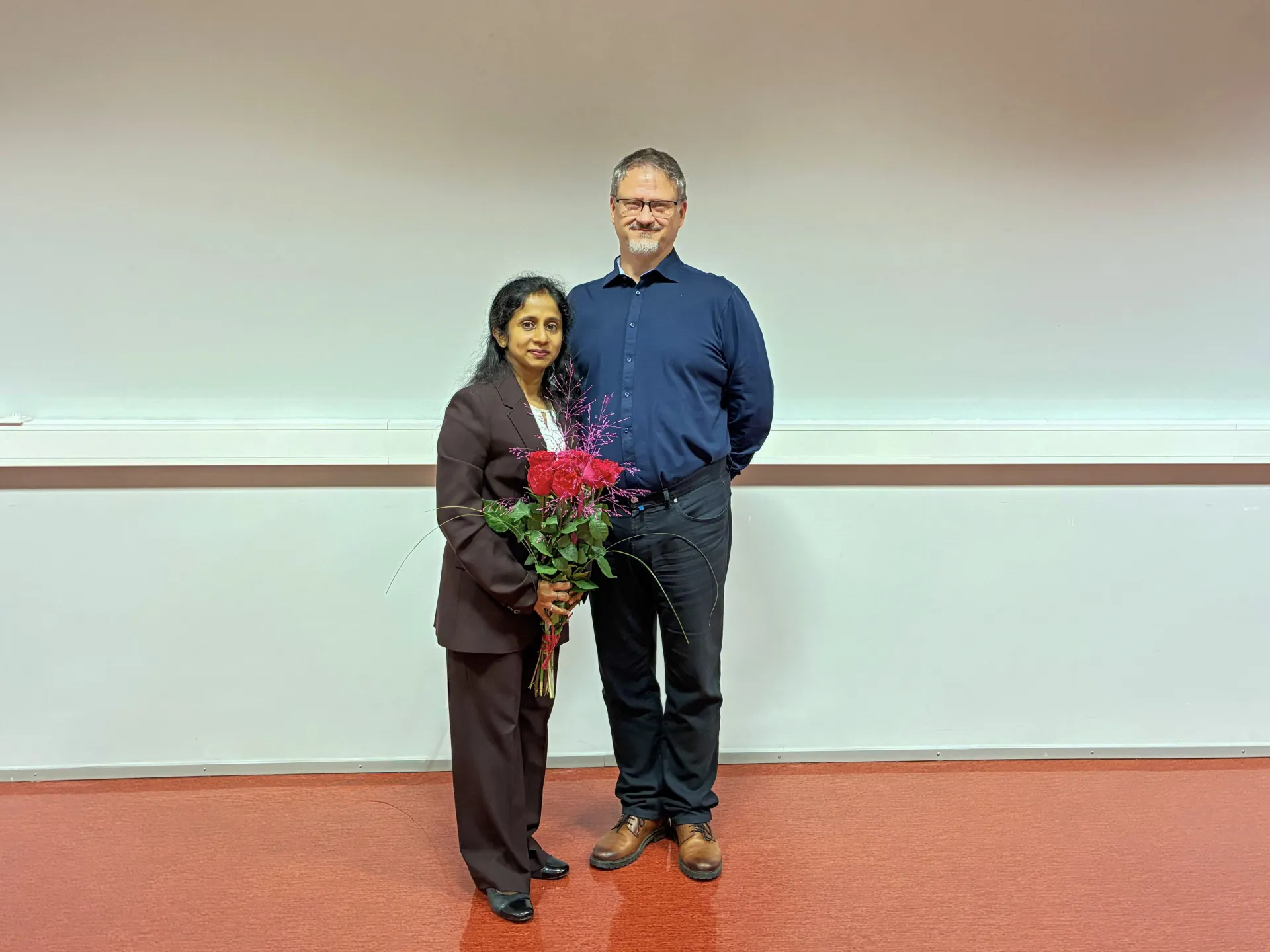
The doctoral thesis was supervised by Professor Timo Kikas from the Estonian University of Life Sciences. The opponents were Associate Professor Linda Mežule from Riga Technical University and Dr Juliano Sabedotti de Biaggi from Tallinn University of Technology.
Turning wood waste into a valuable raw material
Thousands tonnes of wood waste are generated in Estonia every year. At present, most of it is used for energy production or disposed in landfills. Hari investigated how this low-quality wood waste could be used to produce high-value chemicals called biosurfactants, which are naturally derived surface-active compounds.
Biosurfactants are used, for example, in detergents, cosmetics and pharmaceuticals, and offer a more environmentally friendly alternative to synthetic petroleum-based materials. However, their wider use is currently limited by high production costs.
Torrefaction opens up a new use for wood waste
To make wood waste easier for bacteria to break down, it was first heated in an oxygen-free environment in a process known as torrefaction. The biosurfactants produced in the experiments were able to stabilise mixtures of oil and water, suggesting potential applications in areas such as fuel production and oil spill remediation.
The experiments also showed that bacteria can simultaneously produce two types of biosurfactants – rhamnolipids and glycolipopeptides – and that the raw materials used influence their properties. This suggests that the properties of the final products could be tailored by selecting different feedstocks.
Creating higher-value products from waste
The doctoral thesis demonstrates that wood waste can be used to produce higher-value biodegradable chemicals. The research also broadens the potential applications of torrefaction: a technology used mainly for fuel production could also serve as a step in the production of higher-value bioproducts.
The results support the development of circular biorefinery systems in which waste from one production process becomes a raw material for another.
The doctoral thesis is available in the digital archive of the Estonian University of Life Sciences, EMÜ DSpacelink opens in new page.
Editor:

Research Communication Specialist
Rector's Area of Responsibility
Department of Marketing and Communication
53585680
53585680More information:

Specialist in Biotechnology
Institute of Forestry and Engineering
Chair of Biosystems Engineering
+37253636771
+37253636771