
The Estonian University of Life Sciences delegation has returned from the UN Climate Change Conference COP31, where Vice-Rector for Research Kalle Olli participated in the opening panel discussion at the Estonian Pavilion and university researchers presented an aquaponics solution based on water reuse.
On 9 November, Vice-Rector for Research Kalle Olli participated in the opening panel discussion at the Estonian Pavilion, “The Resources Are Already Here”, organised by Ragn-Sells. The discussion focused on the role of the circular economy in addressing challenges related to climate change, biodiversity loss, growing demand for food and increasing competition for resources.
On 12 November, Professor in Water Protection and Waste Management Mait Kriipsalu and Professor in Soil Science Merrit Shanskiy delivered a presentation at the Estonian Pavilion entitled “From Shower Water to Food: Estonia’s Circular Aquaponics Testbed”. They introduced two systems developed and constructed at the Estonian University of Life Sciences that combine fish farming with soilless plant cultivation, allowing water and nutrients to be reused. The presentation attracted a full audience and was followed by questions and direct discussions with attendees.
“The same topics featured in presentations from many countries, but ours offered an integrated approach. While others discussed water, food production or alternative plant nutrients separately, our presentation showed how these elements are interconnected, with one leading to another. In doing so, we also demonstrated the broad scope of the Estonian University of Life Sciences and the effectiveness of cooperation between all our institutes,” said Kriipsalu.
The audience included participants from African and Latin American countries, where access to clean water is a major challenge. The possibility of reusing treated water for food production was particularly relevant to them. The researchers were asked how the system tested at the university could be scaled up, what its opportunities and limitations were, and how the technical solution could be aligned with the legal framework required for its implementation.
“For us, aquaponics is a research, teaching and development project, but someone from a water-scarce region immediately connects it to the needs of their own community. These encounters helped us see our work in a broader context and consider the conditions under which it could be useful elsewhere,” Shanskiy explained.
Interest extended beyond aquaponics. According to Katrin Kepp, Head of the Department of Innovation and Knowledge Transfer at the Estonian University of Life Sciences, COP provided a valuable opportunity to gain a comprehensive overview of developments in the climate sector and showcase the university’s broader research and development capabilities. The meetings helped establish valuable contacts that could lead to new research and development partnerships through further communication. Participants also expressed interest in doctoral studies at the Estonian University of Life Sciences.
“COP brought together people from all over the world, providing an excellent opportunity to understand the direction in which innovation is moving. It was clear that circular bioeconomy issues are important everywhere and that the expertise and competence of researchers at the Estonian University of Life Sciences are trusted. In addition to representatives from the Nordic and Southeast Asian countries, Oman and Uzbekistan, for example, also expressed interest in cooperation. The Estonian Pavilion provided a shared platform for the participating organisations, enabling them to exchange contacts and expand their cooperation networks and opportunities,” said Kepp.
According to Shanskiy, the experience at COP31 confirmed the value of presenting the university’s practical, functioning solutions internationally.
“This allows us to share our knowledge, but also to listen to the questions and needs considered important elsewhere in the world. Our mission as a university is to teach, experiment and help solve complex challenges. The aquaponics project demonstrates how knowledge from different disciplines can produce tangible results through cooperation.”
Kriipsalu also brought back an important message from the conference about the expectations society places on researchers.
“One thought-provoking message was that policymakers want scientists to give them the confidence to make climate-related decisions. Well, we will do our best to provide that confidence.”
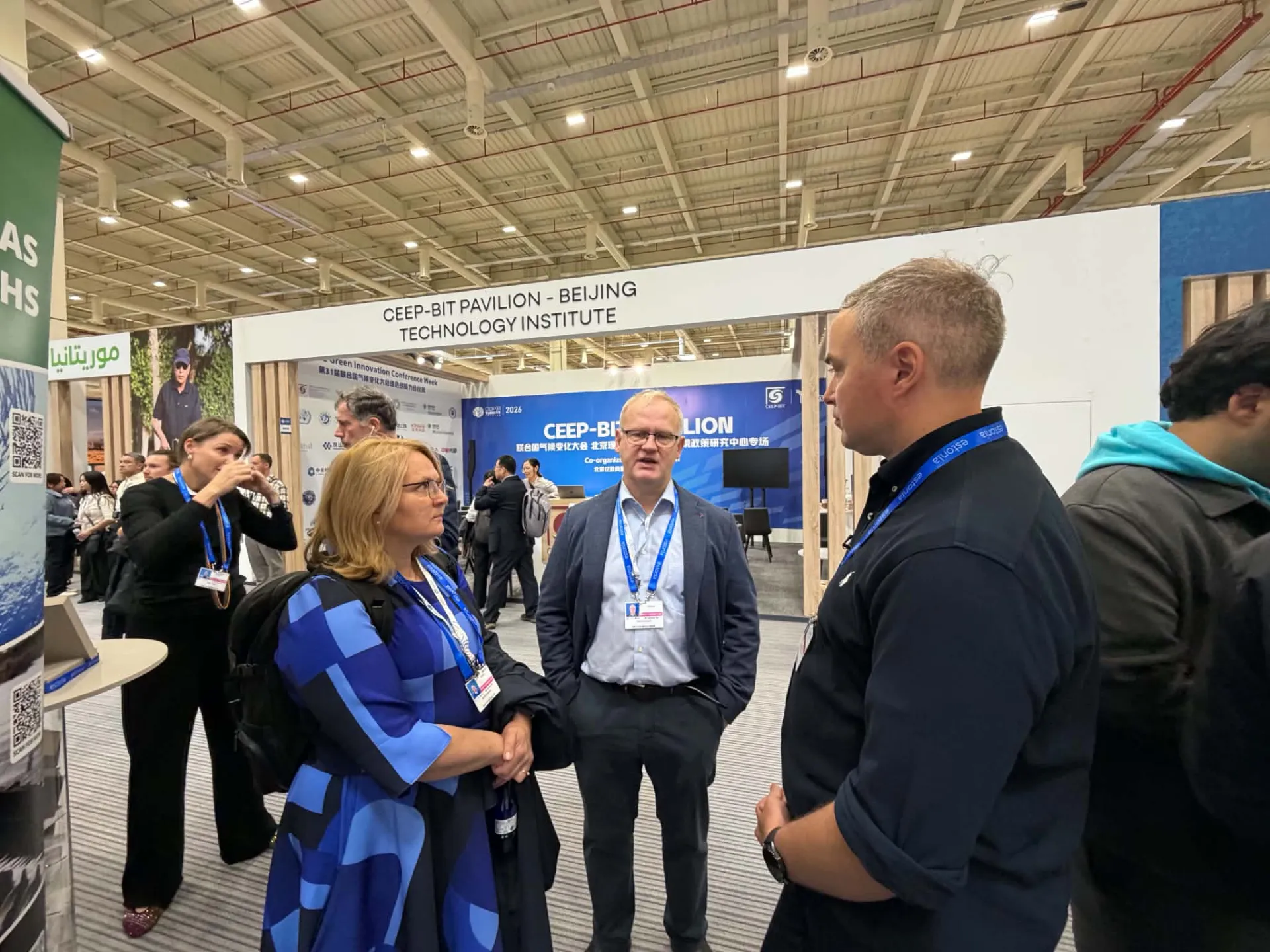
The Estonian University of Life Sciences delegation consisted of Vice-Rector for Research Kalle Olli, Professor in Water Protection and Waste Management Mait Kriipsalu, Professor in Soil Science Merrit Shanskiy, and Head of the Department of Innovation and Knowledge Transfer Katrin Kepp.
The UN Climate Change Conference COP31 continues in Antalya until 20 November. Representatives of the Estonian University of Life Sciences attended the conference from 9 to 12 November.
Explore the Estonian Pavilion programme: COP31 Estonian Pavilion | Estonia at COP31 Antalya 2026link opens in new page
Editor:

Head of the Department of Marketing and Communication
Rector's Area of Responsibility
Department of Marketing and Communication
+372 7313044
+372 731304453315313
53315313